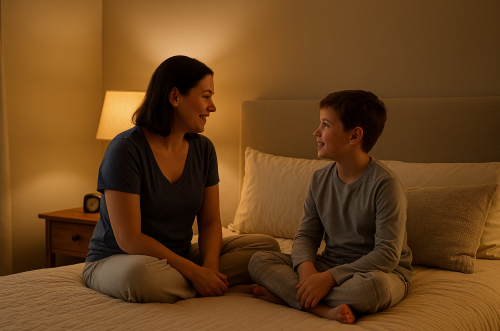
A calm, gentle bedtime routine can help children feel safe and connected. Here’s how to create meaningful rituals that make winding down easier.
By Sergio Toledo
Editor-in-Chief, Heed to Heal
Introduction
The end of the day holds a special kind of quiet. For children, those final moments before bedtime can either feel soothing or restless. While adults often look forward to unwinding at night, children need a little more help making that transition. Their minds may still be buzzing from play, school, or family activities, making it difficult to settle down.
A gentle evening routine can help ease this shift. When children learn to associate bedtime with warmth and predictability, their bodies and minds begin to slow down naturally. This creates a sense of safety that allows them to rest more deeply.
More than just a practical routine, this time can become one of the most meaningful parts of the day. It’s a chance to nurture connection, to remind children that they are loved, and to create quiet rituals they will carry with them for years.
Creating a Sense of Safety
For many children, bedtime can bring a wave of feelings they may not fully understand. Some may feel separation anxiety, others may have lingering worries from the day, and some simply struggle to let go of the excitement of being awake. Establishing a sense of safety is the first step in helping them wind down.
Safety begins with consistency. A predictable routine teaches children that bedtime isn’t something to fear or resist. It’s a familiar rhythm they can trust. Whether it’s brushing teeth, changing into pajamas, or turning off the lights at the same time each night, these rituals signal to the brain that it’s time to rest.
But safety is more than structure. It’s emotional, too. Gentle reassurance, patience, and warm presence from a parent or caregiver help children feel secure. When they sense they are safe, their bodies naturally begin to relax.
The Role of Evening Rituals
Evening rituals can turn bedtime from a struggle into something children look forward to. The key isn’t making these routines complicated but making them meaningful. When they feel connected to the process, resistance often softens.
These rituals can be simple and calming:
- Reading a favorite book together
- Listening to soft, soothing music
- Gentle stretches or breathing exercises
- Dimming lights to create a cozy atmosphere
- Talking quietly about the best part of their day
These small, intentional acts help signal to the nervous system that it’s time to slow down. Over time, children come to associate these rituals with peace and comfort, making the transition to sleep less of a battle and more of a natural flow.
Teaching the Art of Slowing Down
Children don’t always know how to slow their minds and bodies, especially after a day filled with activity and stimulation. Bedtime offers an opportunity to gently guide them into a slower rhythm. It’s less about forcing quiet and more about creating space for calm to settle in.
This can begin with lowering the energy in the room. Soft lighting, reduced noise, and unhurried voices help shift the environment. Parents can model this pace themselves, showing that evening is a time to ease into quiet.
The final few minutes before sleep often become some of the most tender. A quiet talk, a warm hug, or simply being near a parent can make children feel safe and loved. Over time, these soft, consistent gestures shape how they view bedtime. Instead of resistance, it becomes a moment of connection they can depend on.
References
- American Academy of Sleep Medicine. “Bedtime Routines for Children.”
- American Academy of Pediatrics. “Healthy Sleep Habits for Kids.”
- Greater Good Science Center. “The Importance of Evening Connection.”
Originally published by Heed to Heal, 10.28.2025, under the terms of a Creative Commons Attribution-NonCommercial-NoDerivatives 4.0 International license.